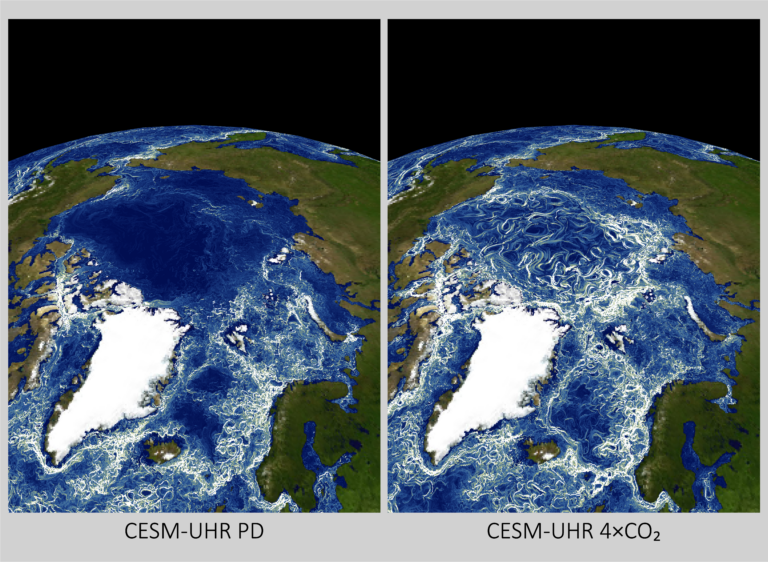
More Polar Ocean Turbulence due to Planetary Warming
A study published in the journal Nature Climate Change by an international team of scientists, from the IBS Center for Climate Physics (ICCP) at Pusan National University in South Korea, […]
A study published in the journal Nature Climate Change by an international team of scientists, from the IBS Center for Climate Physics (ICCP) at Pusan National University in South Korea, […]
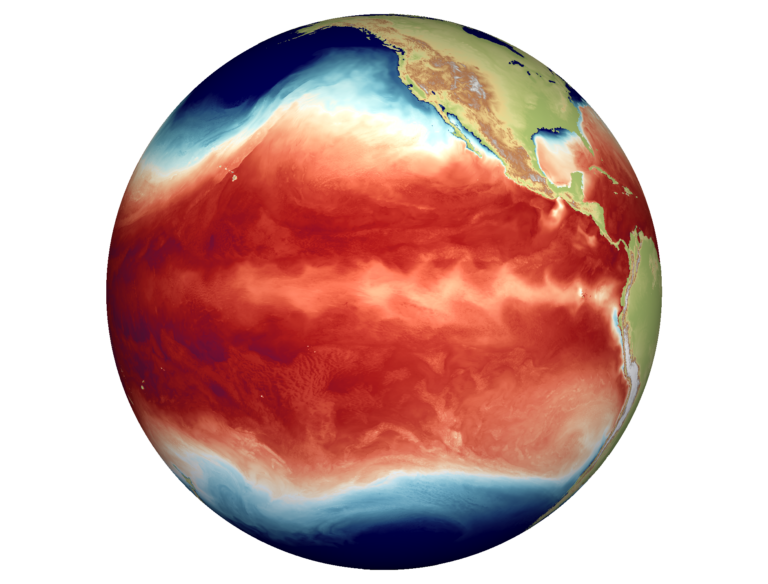
A new study published in the journal Nature Communications reveals that the El Niño-Southern Oscillation (ENSO), a key driver of global climate variability, is projected to undergo a dramatic transformation […]
A new study published in the journal Nature Communications by researchers from the IBS Center for Climate Physics (ICCP) at Pusan National University in the Republic of Korea reveals that […]
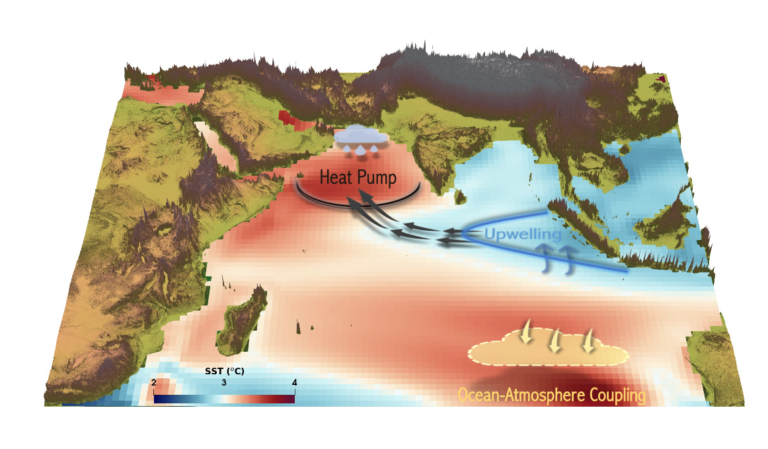
A study published in Nature Communications by an international team of climate scientists uncovers the physical mechanisms that can cause uneven future warming in the Indian Ocean and corresponding shifts […]
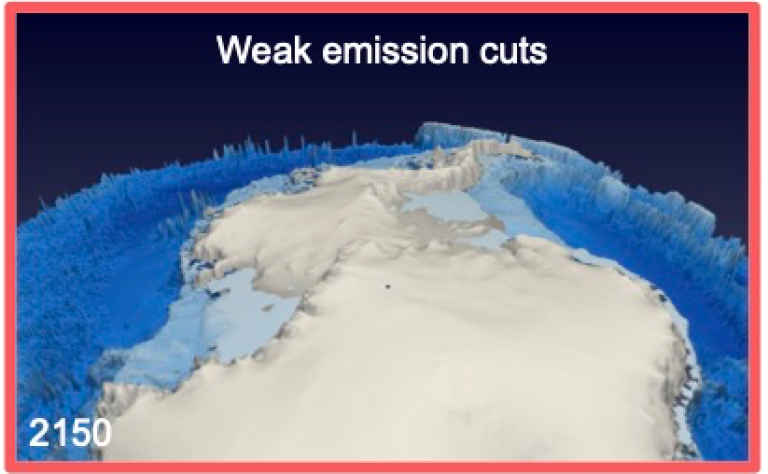
A study published in Nature Communications by an international team of scientists shows that an irreversible loss of the West Antarctic and Greenland ice sheets, and a corresponding rapid acceleration […]
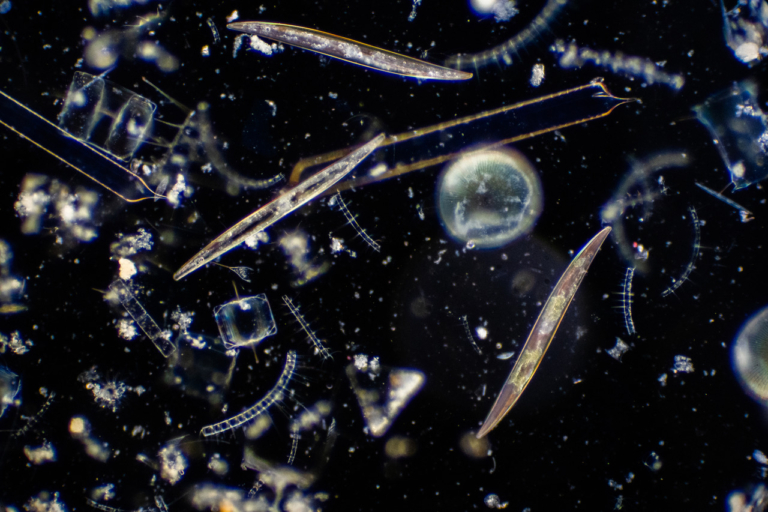
A study published in Science Advances by an international team of scientists provides clear evidence that marine phytoplankton are much more resilient to future climate change than previously thought. Combining […]
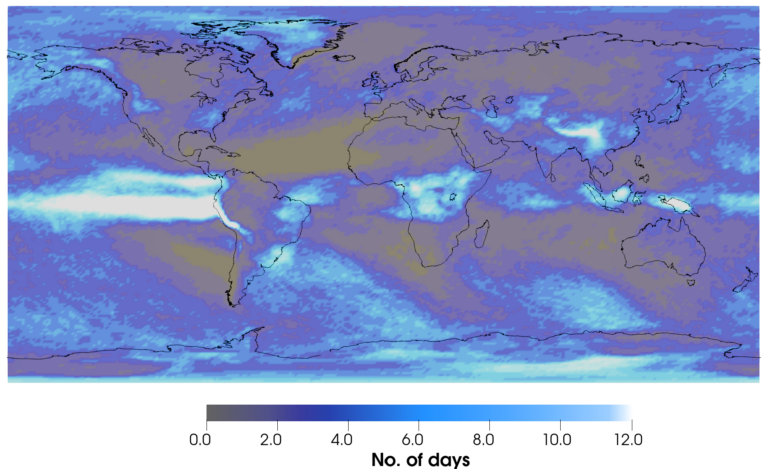
New computer model simulations identify widespread changes in climate variability under sustained anthropogenic forcing There is growing public awareness that climate change will impact society not only through changes in […]
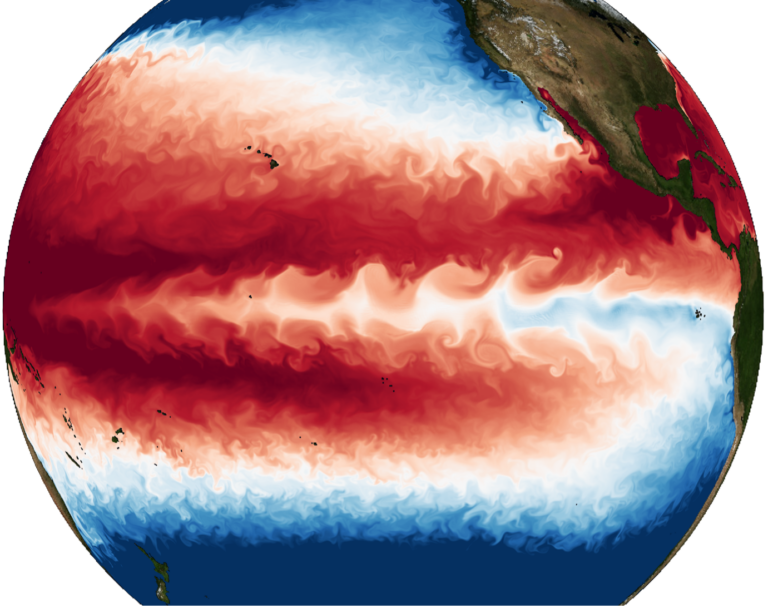
Highest resolution global warming simulation conducted to date reveals possible end of El Niño/ La Niña temperature cycle The cycling between warm El Niño and cold La Niña conditions in […]
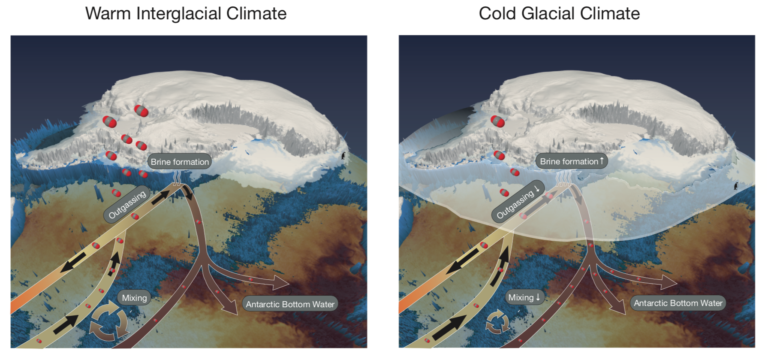
During past glacial periods the earth was about 6ºC colder and the Northern hemisphere continents were covered by ice sheets up to 4 kilometers thick. However, the earth would not […]

The contemporary ocean provides a climate service by absorbing excess heat and carbon from the atmosphere, thereby slowing the pace of rising global temperatures. This service, however, comes with penalty — namely […]